The object of this institution is to give an education suited and adapted to the Indian background. Great care is taken to form the character of the pupils. The Vidyapith being a time-tested institution, it is possible to give proper stress on leadership training and prepare the students to grow into empathetic enlightened citizens for a democratic society.
In the year 2024 the establishment of Sri Ramakrishna Temple at Purulia Vidyapith premises completed its sanctified 50 years. In compliance with the loving and noble thought of Revered Swami Vireswaranandaji Maharaj Purulia Vidyapith starts an Agriculture College from the academic year 2025-2026. Ramakrishna Mission Vidyapith Agriculture College, Purulia (রামকৃৃষ্ণ মিশন বিদ্যাপীঠ কৃৃষি মহাবিদ্যালয়, পুুরুলিয়া) affiliated to Bidhan Chandra Krishi Viswavidyalaya, Mohanpur, Nadia offers a Bachelor of Science in Agriculture (Hons.) course with an intake of 60 students (boys and girls) per year. This college is designed to equip students with comprehensive knowledge and practical skills essential for addressing contemporary challenges in agriculture and allied fields.
Foundation
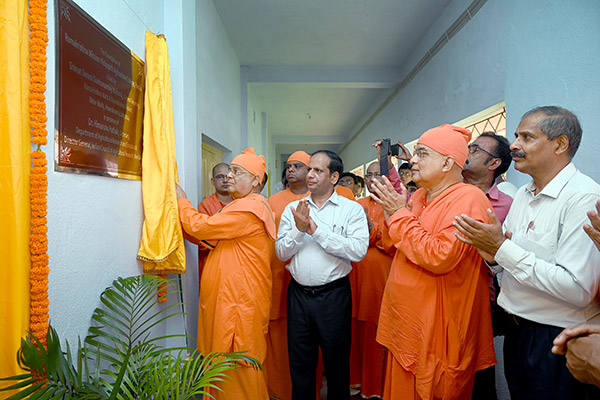
Foundation of the college was laid by Revered Swami Suviranandaji Maharaj, General Secretary, Ramakrishna Math & Ramakrishna Mission, Belur Math, Howrah on 24 July 2024 in presence of Hon’ble dignitaries of national level from agriculture discipline.
Situation
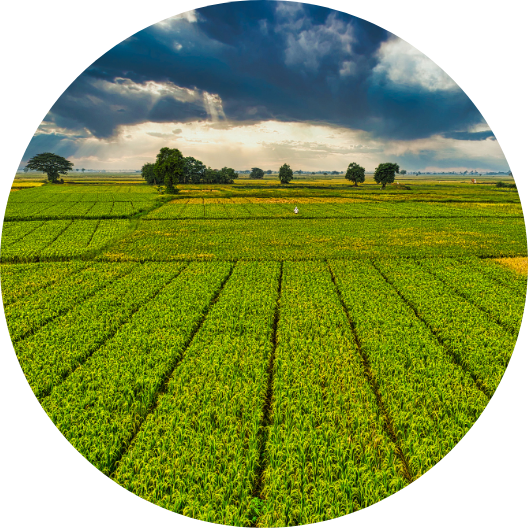
The Vidyapith, situated on the Purulia-Barakar Road, is about 3 kms, and 5 kms, away from Purulia town and Railway station respectively. The groves of trees, expansive fields and the undulating land lend to it a beauty which is at once enchanting and calm. The campus measures more than 76 acres. On the western side of Purulia-Barakar Road the Vidyapith has another beautiful campus of 3 acres of land.
67
Need of Agriculture
Agriculture is the cornerstone of human civilization and has undergone a remarkable journey over centuries. From humble beginnings of subsistence farming to the highly sophisticated agribusinesses of today, agriculture has always been the bedrock of societies.
As the world’s population continues to burgeon, the demand for food, fibre and energy escalates, exerting pressure on agricultural systems. Simultaneously, the need to conserve natural resources and reduce the environmental impact of agricultural practices has become paramount. This confluence of challenges necessitates a paradigm shift in how agriculture is perceived, practised and taught.
Human resource capital is the main driver of comprehensive development in all spheres of the Nation. Agricultural education has a profound role to play in shaping the future of sustainable agriculture. It has focused on imparting practical skills and techniques to ensure productive yields. It is essential to develop well-trained agricultural professionals. The graduates are required to possess professional capabilities to deal with
the concerns of sustainable development of agriculture with respect to productivity, profitability and stability. There is need for agriculture graduates to possess knowledge, skills and entrepreneurship abilities to provide village-based services such as advisories on innovations, markets and avenues of development assistance for corporate and contract farming.